

Online vs In Person Coding Classes for Kids

One child lights up the second they can build a game from a laptop at home. Another learns best when a teacher is right there, helping them fix a robot that will not move. That is why the question of online vs in person coding classes matters so much for parents. The best format is not the one with the flashiest features. It is the one that helps your child stay curious, keep showing up, and actually build skills.
For families choosing a coding class, the real decision is not just about location. It is about attention span, confidence, routine, learning style, and what kind of support helps a child turn interest into progress. Some kids thrive online. Others need the energy of a classroom. Many do well in either setting when the teaching is strong and the projects are engaging.
Online vs in person coding classes: what really changes?
At a glance, both formats can teach the same core skills. A child can learn Scratch, Python, game development, robotics concepts, and computational thinking online or in person. What changes is the learning environment.
Online classes usually give families more flexibility. Kids can join from home, avoid travel time, and often fit lessons more easily into a busy week. For parents juggling school, activities, and work, that convenience is not small. It can be the difference between a child starting coding now or waiting indefinitely.
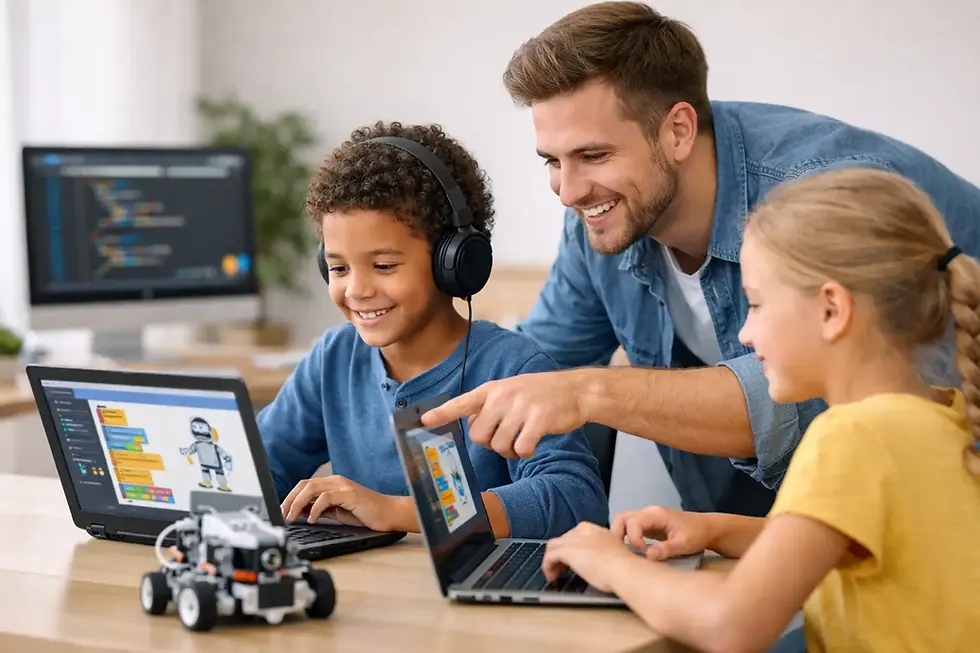
In-person classes offer a different kind of momentum. The physical classroom creates structure. Children can see what other students are building, ask questions in the moment, and often stay more focused simply because they are in a dedicated learning space. For hands-on subjects like robotics or mechatronics, being physically present can make the experience feel more immediate and exciting.
The key point is this: format shapes how a child learns, but it does not automatically decide how much they learn. Teaching quality, class size, and project design still matter more than whether the lesson happens on a screen or in a classroom.
When online coding classes are a great fit
Online coding classes work especially well for children who are comfortable using a computer independently, can follow instructions without constant reminders, and enjoy creating things in digital spaces. If your child already likes games, animation, or experimenting with apps, online learning can feel natural.
There is also something powerful about learning coding in the same place where kids already explore technology every day. They are not just attending a class. They are building digital confidence in their own environment. That can make them more likely to practice between sessions, revisit projects, and show off what they have made.
For older kids, online classes often support deeper independence. A student learning Python or game development may benefit from having their own setup, their own files, and a chance to problem-solve more directly. This mirrors how real coding often happens later in school and in careers.
Online classes can also be a smart choice for families in areas where specialized tech programs are harder to access. In Malaysia, for example, flexible online programs can open up quality STEM learning without requiring long travel times. That wider access matters when parents want strong instruction but do not want logistics to become a barrier.
Still, online learning is not effortless. Younger children may need a parent nearby at first. Some kids get distracted by home surroundings. Others find it harder to ask for help through a screen, even with a supportive instructor. Convenience is a real benefit, but only if the class is interactive enough to keep children engaged.
When in-person coding classes make more sense
In-person classes tend to shine for children who learn best through physical cues, face-to-face encouragement, and a structured routine outside the home. If your child struggles to stay focused during online learning, a classroom can be a game changer.
There is also a social advantage. Coding may look like a solo activity from the outside, but good coding classes are highly collaborative. Kids compare projects, solve problems together, and get inspired by what others create. In a live classroom, that energy is easier to feel. A child who is hesitant at home may become much more expressive in a room full of builders and creators.
For younger students, especially ages 5 to 9, in-person support can be especially valuable. At this stage, children are still developing patience, keyboard skills, and the ability to follow multi-step instructions. Having a teacher physically present can reduce frustration and help small challenges stay small.
In-person learning is also a natural fit for programs involving robotics, mechatronics, and hardware-based projects. Yes, some concepts can be taught online, but there is a big difference between watching a mechanism work and building one with your own hands. For many kids, that physical interaction is what makes STEM click.
The trade-off is time and scheduling. Travel, traffic, and fixed class slots can be difficult for busy families. A great in-person class may still be the wrong fit if getting there every week becomes stressful.
Age, personality, and goals matter more than trends
Parents often ask which option is better overall, but the better question is better for whom. A confident 13-year-old who wants to learn Python may do brilliantly online. A curious 7-year-old who needs movement, reminders, and face-to-face encouragement may progress faster in person.
Personality matters too. Some children love the comfort of learning from home. They speak up more, feel less pressure, and settle into coding quickly. Others need the buzz of a classroom to stay alert and motivated. Neither style is better. They are simply different.
Goals should shape the choice as well. If your child wants broad exposure to coding basics, either format can work well. If the goal is stronger collaboration, social confidence, or hands-on hardware experience, in-person classes may offer more. If the goal is consistency, convenience, and easier access to specialized topics, online classes can be the stronger option.
How to tell if a class will actually keep your child engaged
Parents sometimes focus so much on online vs in person coding classes that they miss the bigger quality signals. A child does not stay engaged just because a class is in the right format. Engagement comes from what happens inside the lesson.
Look for project-based learning. Kids learn coding faster when they are making games, animations, apps, or robots instead of just listening to explanations. Building something gives every lesson a purpose.
Look for interactive teaching, not passive screen time. Whether online or in person, children need chances to ask questions, test ideas, make mistakes, and try again. That is how confidence grows.
It also helps to look at pacing. A strong kids' coding class should feel structured without feeling rigid. If lessons move too fast, beginners lose confidence. If they move too slowly, kids get bored. Good programs meet children at their level and keep them moving forward step by step.
Finally, pay attention to support. Can your child get help when stuck? Are instructors encouraging? Is the class beginner-friendly? These details often matter more than the format itself.
Choosing the right fit for your family
If you are deciding between formats, start with a few honest questions. Can your child focus at home? Do they need face-to-face guidance? Is your weekly schedule flexible enough for travel? Are they excited by digital creation, physical building, or both?
If you are still unsure, a trial class is often the best next step. Watching your child in the real learning environment tells you more than any brochure ever will. You will quickly notice whether they are curious, comfortable, and ready to come back for more.
That is often the clearest sign you are choosing well. The right class does not just teach coding. It helps your child feel capable. It turns technology from something they consume into something they can create.
At MiniMindsDevs, that is the goal behind both flexible online learning and hands-on classroom experiences: helping kids build real skills in a way that feels exciting, achievable, and age-appropriate.
The best choice is the one that makes your child want to keep building after class ends. That is where confidence starts, and where future-ready skills begin to grow.


Comments