

What Is a Coding Course for Kids?
- MiniMindsDevs
- Apr 15
- 6 min read

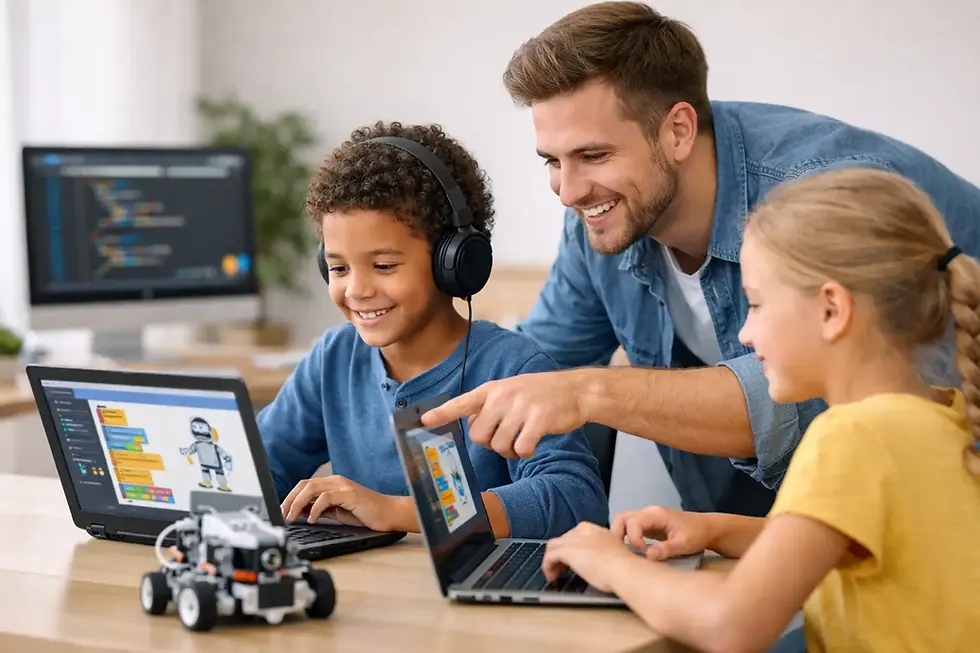
If your child loves games, apps, gadgets, or asking how things work, you may already be wondering: what is coding course for kids, really? Is it just extra screen time, or is it something more practical and purposeful? For most families, the answer becomes clear once they see a good class in action - kids are not just watching. They are building, testing, fixing, and creating.
What Is a Coding Course for Kids?
A coding course for kids is a structured learning program that teaches children how technology works by helping them create with it. Instead of only using apps or playing games, kids learn how to make their own simple animations, games, websites, programs, or even control robots, depending on their age and level.
The best courses are designed for young learners, which means they do not throw children into complicated computer science theory on day one. They usually start with age-appropriate tools, clear guidance, and hands-on projects. A younger child might learn sequencing and logic through visual blocks, while an older student might write real code in Python or build a basic game.
That difference matters. A true kids' coding course is not just adult programming content simplified a little. It is built around how children learn best - with interaction, experimentation, and visible results they can feel proud of.
What Kids Actually Learn in a Coding Course
Parents often assume coding classes are mainly about typing commands into a computer. Sometimes that is part of it, but a strong course teaches much more than syntax.
Children learn how to break a big idea into smaller steps. They practice spotting patterns, following logic, and fixing mistakes without giving up. They also learn creative thinking because coding is not only about getting the "right" answer. It is also about deciding how a game should move, what a character should do, or how a project should look and respond.
Many courses also build presentation and communication skills. When kids explain how their project works, they start thinking like creators, not just users. That shift can be powerful, especially for children who gain confidence by seeing their ideas come to life on screen.
Why Parents Are Paying Attention to Coding Early
Coding has become popular for a reason, but not every reason is about future careers. Yes, technology skills can open doors later. But for younger learners, the immediate value is often even more useful.
A well-designed coding course gives children productive screen time with a clear goal. It turns passive consumption into active problem-solving. Instead of scrolling, they are making choices, testing ideas, and learning that mistakes are part of progress.
For some kids, coding becomes a creative outlet. For others, it becomes a confidence booster. A child who struggles to stay interested in worksheets may light up when building a mini game or programming a robot to move. That kind of engagement is one reason parents look for coding programs as an enrichment activity, not just an academic extra.
What Is a Coding Course for Kids by Age?
Not every child should learn coding the same way. A course that feels exciting for a 7-year-old may feel too basic for a 13-year-old, while a teen-level class can overwhelm a beginner in elementary school.
Ages 5 to 7
At this stage, coding is usually introduced through visual tools, storytelling, games, and simple logic challenges. Children learn sequencing, patterns, and cause-and-effect thinking. The goal is not to memorize programming terms. It is to help them understand that technology follows instructions and that they can control outcomes.
Ages 8 to 12
This is often the sweet spot for project-based coding. Kids can start creating simple games, animations, and interactive stories while learning concepts like loops, conditions, variables, and debugging. They are old enough to build real projects, but still benefit from playful, visual learning.
Ages 13 to 16
Older students are usually ready for more advanced tools and text-based programming languages such as Python. They may explore game development, app logic, robotics, or mechatronics projects. At this level, coding can become more closely connected to future academic and career interests, but it should still stay practical and engaging.
What Makes a Good Kids' Coding Course?
This is where quality matters. Not every program that uses the word coding gives children a meaningful learning experience.
A good course is structured, but not rigid. It guides children step by step while still giving them room to experiment. It uses projects because kids stay motivated when they can see what they are making. It also matches lessons to age and skill level so beginners do not feel lost and advanced learners do not get bored.
Instruction style matters too. Children learn better when the teacher explains clearly, encourages questions, and helps them work through mistakes instead of rushing to the answer. A supportive environment can make the difference between a child who says, "This is too hard," and one who says, "Let me try again."
That is why many parents look for programs with interactive teaching, beginner-friendly pathways, and trial classes. A trial can quickly show whether the course feels exciting, manageable, and worth continuing.
Coding Course vs. Random Coding Videos
Some parents wonder if free videos are enough. They can help with curiosity, but they usually do not replace a real course.
Videos are often passive and unstructured. A child may copy what they see without understanding why it works. When they get stuck, there is no guidance, no feedback, and no clear learning path. That can lead to frustration fast.
A coding course, by contrast, gives progression. Skills are introduced in order. Projects become more challenging over time. There is support when children hit a problem, and that support is important because problem-solving is where much of the learning happens.
Free content can be a nice supplement. But if the goal is consistent skill building, a structured course usually gets better results.
Online or In-Person: Which Is Better?
It depends on the child.
Online coding classes can be flexible, convenient, and very effective when they are interactive. They work well for families with busy schedules and for kids who are comfortable learning on a computer. In-person classes can be helpful for younger children or those who focus better in a classroom environment with face-to-face support.
Neither format is automatically better. What matters more is how the class is taught. If the sessions are engaging, project-based, and age-appropriate, both online and physical classes can help kids learn well.
For families in Malaysia, having flexible delivery options can be especially useful because parents often juggle school schedules, traffic, and enrichment activities. That is one reason businesses like MiniMindsDevs focus on both accessibility and hands-on instruction.
Signs Your Child Is Ready for a Coding Course
Your child does not need to be a math genius or a computer expert to begin. In fact, many beginners start with zero experience.
A child may be ready if they enjoy building things, solving puzzles, asking questions about technology, or showing curiosity about how games and apps work. Some children are drawn to coding because they love creativity. Others like the challenge of making something work. Both are great starting points.
Readiness also depends on attention span and the course design. A good beginner program should meet children where they are, not expect them to already know what they are doing.
What Results Can Parents Expect?
The biggest early result is usually confidence. Kids start realizing they can create something from scratch, test it, improve it, and show it to others. That kind of progress feels real.
Over time, parents may notice better logical thinking, more patience with challenges, and stronger focus during project work. Some children become excited about STEM subjects more broadly. Others discover a specific interest in game development, robotics, or programming.
Of course, not every child who takes coding will become a software engineer. That is fine. The value of a coding course is not limited to one career path. It teaches children how to think, how to create, and how to keep going when something does not work the first time.
That is a skill set worth building early.
The best way to think about a coding course for kids is simple: it is not just a class about computers. It is a class about creativity, logic, resilience, and turning ideas into something real. And when a child discovers they can build, not just consume, technology starts to feel a lot more exciting.


Comments