

When Should Kids Start Coding?
- MiniMindsDevs
- Apr 27
- 5 min read

Some parents ask this after their child builds a game in class. Others ask it after watching their 6-year-old fly through a tablet app faster than they can. If you are wondering when should kids start coding, the honest answer is earlier than many people think - but not in the way most people imagine.
Coding does not have to begin with typing complicated commands or memorizing syntax. For young children, it often starts with patterns, logic, sequencing, and simple problem-solving. The real question is not just age. It is readiness, interest, and whether the learning experience matches the child.
When should kids start coding by age?
Many children are ready for coding foundations around ages 5 to 7. At that stage, the best approach is playful and visual. Think block-based activities, simple digital games, and guided tasks that teach children how to give instructions, spot mistakes, and try again.
Around ages 8 to 10, many kids can handle more structure. They usually have stronger reading skills, better focus, and more patience for step-by-step projects. This is often a great age to move from basic coding concepts into building animations, games, and beginner robotics projects.
By ages 11 to 13, kids can usually work with more detailed logic and start exploring text-based programming in a beginner-friendly way. They may be ready for Python, game development, or projects that connect coding to real interests like design, storytelling, or problem-solving.
Teenagers can absolutely start coding too. In fact, many do very well because they can see the bigger picture faster. They may move more quickly through beginner concepts, especially when lessons are practical and tied to real outcomes. So if a child did not start at 6, that does not mean they are behind.
The best age to start coding is not the same for every child
Age matters, but it is only one piece of the picture. A curious 6-year-old who loves puzzles may be more ready than a 9-year-old who gets frustrated easily with trial and error. Some children enjoy open-ended creative tasks. Others prefer clear instructions and immediate wins.
That is why parents should look beyond the question of what age is best and ask a better one: what kind of coding experience fits my child right now?
A good starting point feels engaging, not intimidating. It gives children enough challenge to stay interested, but not so much that they shut down. The goal is not to push kids into advanced programming early. The goal is to help them build confidence while learning how technology works.
Signs your child is ready to learn coding
You do not need your child to be a math genius or a computer expert. In fact, most beginners are neither. A child may be ready for coding if they enjoy solving puzzles, building things, asking how games work, or experimenting with cause and effect.
Focus also matters, but it does not need to be perfect. Young learners can start with short, interactive lessons that keep them moving and creating. If your child likes stories, art, games, or gadgets, coding can become a natural extension of those interests.
One more sign is resilience. Coding involves mistakes, testing, and trying again. Children who are learning to stick with a challenge, even briefly, often benefit from structured coding activities because they practice patience in a fun, visible way.
What coding looks like at different ages
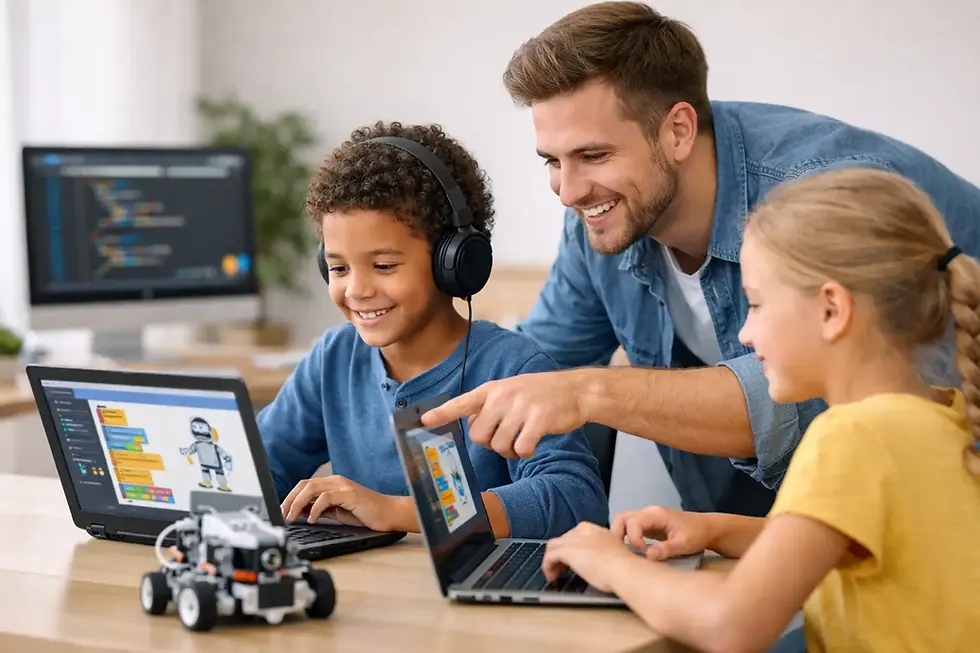
For younger kids, coding should feel like play with a purpose. They might arrange blocks to move a character, control a robot through simple commands, or complete visual challenges that teach sequencing and logic. They are not just staring at a screen. They are learning how instructions create results.
For elementary-age children, coding becomes more project-based. They may create games, animations, or interactive stories. This is where many kids start to feel proud of what they have made, because they can show a finished project to family and friends.
For older kids and teens, coding often becomes more goal-driven. They may want to design a game, build a simple app, or understand how real programming languages work. At this stage, project-based learning is especially powerful because it connects technical skills to visible progress.
Why starting too early can backfire
Yes, children can start young. But starting too early with the wrong method can create frustration instead of excitement.
If coding is taught like a lecture, packed with jargon, or pushed before a child is developmentally ready, it may feel boring or confusing. That does not mean the child is not capable. It usually means the format is a poor fit.
This is one of the biggest misunderstandings around early tech education. Starting early is helpful when the learning is interactive, age-appropriate, and hands-on. Starting early is not helpful when it turns into pressure.
Parents do not need to rush into the most advanced option available. A child who enjoys simple coding games and basic robotics at age 6 is building real foundations. Those early wins often matter more than racing ahead.
Why coding is valuable even if your child never becomes a programmer
Some parents hesitate because they are not sure their child will want a future in tech. That is fair. Coding still has value.
When children learn to code, they practice breaking big problems into smaller steps. They learn that mistakes are part of progress. They build creative confidence by turning ideas into something real, whether that is a mini game, a robot action, or an animation.
These are useful skills far beyond computer science. Coding supports logical thinking, persistence, communication, and digital literacy. It also helps children move from consuming technology to creating with it. That shift alone can be powerful.
How parents can choose the right starting point
If your child is new to coding, begin with a program designed for beginners and matched to their age group. That sounds obvious, but it matters. A 7-year-old and a 14-year-old may both be beginners, yet they need very different teaching styles.
Look for classes that are interactive and project-based rather than heavily theoretical. Children stay engaged when they can make something, test it, and improve it. A good learning environment also gives room for questions, mistakes, and small victories.
It helps to pay attention to your child’s personality too. Some kids love fast-paced exploration. Others do better with steady guidance. Trial classes can be especially useful because they let parents see how the child responds before committing to a longer program.
For families in Malaysia, this can be especially valuable when comparing online and in-person options. Some children thrive in the energy of a physical classroom, while others focus better in a familiar home setting.
So, when should kids start coding?
Kids can start coding as early as 5 or 6 if the lessons are playful, visual, and age-appropriate. Many children build strong momentum in the 7 to 10 range, when they can combine creativity with growing logic skills. Older kids can start just as successfully, especially when the learning is practical and connected to their interests.
The best time is not when coding becomes trendy, and not when a parent feels pressure to get ahead. The best time is when a child is ready to explore, create, and learn through doing.
That is why the strongest coding journeys usually do not begin with a big announcement. They begin with a child making something small, smiling when it works, and wanting to try again.
If you are choosing the moment to begin, aim for curiosity over pressure and progress over perfection. That is where real confidence starts.


Comments