

Why Robotics Education Works for Kids
- MiniMindsDevs
- Apr 17
- 5 min read

A child who struggles to sit through a worksheet can spend an hour adjusting a robot and not want to stop. That is part of what makes robotics education so effective. It turns abstract STEM ideas into something kids can see, test, fix, and improve with their own hands.
For parents, that matters. Many children are curious about technology, but curiosity fades fast when learning feels too theoretical or too advanced. Robotics gives kids a clear reason to learn. If the robot does not move, there is a problem to solve. If it turns the wrong way, there is code to improve. Every small success feels real, and that keeps motivation high.
What robotics education actually teaches
At first glance, robotics looks like a fun mix of motors, sensors, and simple programming. It is that, but the real value goes further. Good robotics programs teach children how systems work. A robot follows instructions, responds to inputs, and produces an outcome. That process helps kids understand cause and effect in a very practical way.
Children also learn that technology is something they can create, not just consume. Instead of only playing games or watching videos, they build something interactive. That shift is powerful. It changes a child from a passive user into an active maker.
Robotics education also blends multiple skills at once. Coding is one part, but so are logic, engineering thinking, creativity, patience, and communication. A child might build a robot, write the instructions for it, test why it failed, explain the issue, and try again. That is rich learning packed into one project.
Why hands-on learning keeps kids engaged
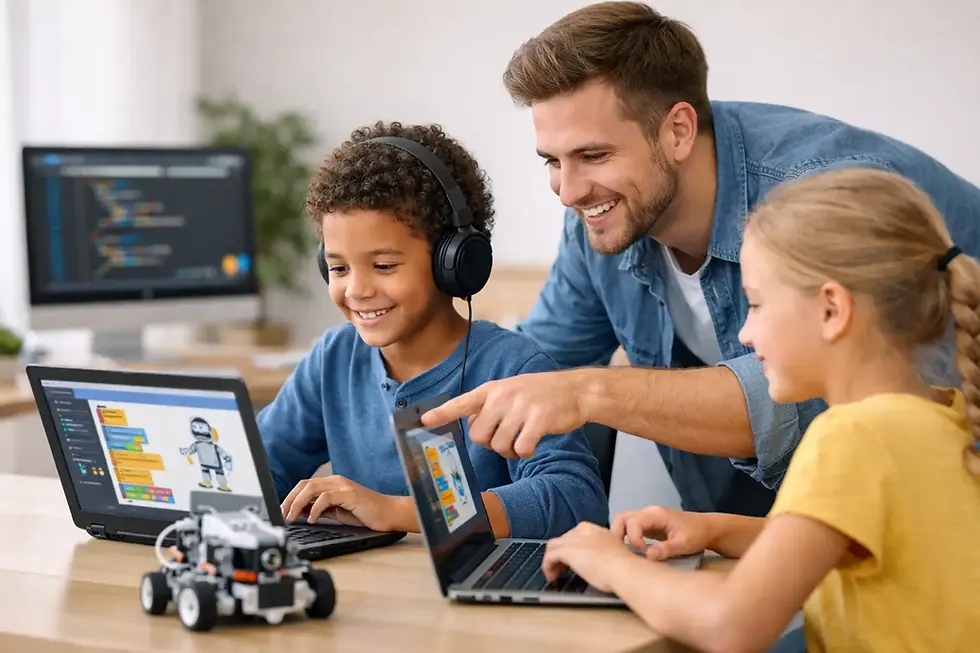
Many parents want their kids to learn STEM skills, but they also worry about attention span, frustration, or too much screen time. Robotics works well because it is active. Kids are not just staring at code on a monitor. They are building, moving, adjusting, and experimenting.
That hands-on format helps different types of learners. Some children understand ideas best when they can physically interact with materials. Others stay engaged because the project gives them an immediate goal. Instead of asking, "Why do I need to learn this?" they can see the answer right in front of them.
This is especially helpful for younger learners. A six-year-old may not be ready for long coding explanations, but they can absolutely understand that a robot needs the right command to move forward. Older kids benefit too, because robotics adds a layer of challenge and creativity that simple drag-and-drop coding often lacks.
Robotics education builds more than technical skills
Parents often start by looking for coding classes, but the biggest wins are not always about syntax or hardware. Robotics education builds confidence.
When kids complete a project, they get proof that they can figure things out. When something breaks, they learn that mistakes are part of the process, not a sign to give up. That mindset matters far beyond technology. It supports resilience, independence, and problem-solving in school and everyday life.
There is also a communication side that people sometimes miss. Children often work in pairs or small groups, which means they need to explain ideas, share tasks, and listen to feedback. If they enter competitions or present projects, they practice speaking about what they built and why it works. That combination of technical and human skills is valuable.
What kids learn at different ages
Not every robotics class should look the same. Age matters, and the best programs adjust the tools and teaching style to fit the child.
Ages 5 to 7
At this stage, robotics should feel playful and visual. Children do well with simple building tasks, basic sequencing, and clear cause-and-effect activities. The goal is not deep technical mastery. It is comfort, curiosity, and early confidence.
Ages 8 to 12
This is often a great age for project-based robotics. Kids can handle more structured logic, simple sensors, and beginner coding concepts. They start connecting their ideas to outcomes and can follow multi-step challenges with more independence.
Ages 13 to 16
Older students are ready for more complexity. They can work with deeper programming logic, more advanced mechanical design, and real troubleshooting. At this level, robotics can become a strong bridge into coding, mechatronics, Python, and future STEM pathways.
The key is progression. A child should feel challenged, but not overwhelmed. If a program moves too slowly, they get bored. If it moves too fast, they shut down. Strong instruction finds the middle.
How to tell if a robotics program is actually good
Not all STEM classes deliver the same results. Some sound impressive but rely too much on passive instruction or one-size-fits-all lessons. Parents do not need to be tech experts to spot a quality program.
A strong robotics class gives kids time to build and test, not just watch. It uses projects to teach concepts instead of teaching concepts in isolation. It also has a clear path for beginners. If a child needs prior experience to keep up, that is a problem for many families.
It also helps to look at how the program handles mistakes. In good classes, troubleshooting is part of the learning experience. Kids are encouraged to experiment, ask questions, and improve their work. That creates a healthier and more realistic learning environment than a class focused only on getting the right answer the first time.
Parents should also pay attention to engagement. Are children excited to show what they made? Can they explain it in simple terms? If they feel ownership over the project, the class is doing something right.
The trade-offs parents should know
Robotics is exciting, but it is not magic. Like any educational activity, results depend on teaching quality, consistency, and fit.
Some children love building right away. Others need time to warm up, especially if they feel nervous about getting things wrong. That is normal. A beginner-friendly environment makes a big difference.
There is also the question of balance. Robotics can support coding skills, but it should not always replace pure programming practice for older students who want to go deeper. In many cases, the best path is a mix. Robotics brings coding to life, while standalone programming helps students build stronger technical foundations.
Cost and access can matter too. Hardware-based learning can be more expensive than simple online coding lessons. That is why structured classes with guided support often offer better value than buying a kit and hoping a child figures it out alone.
Why robotics matters for the future
Children growing up now will enter a world shaped by automation, AI, smart devices, and digital systems. They do not all need to become engineers, but they will benefit from understanding how technology works and how to think through problems logically.
Robotics introduces that way of thinking early. It teaches kids to break big tasks into smaller steps, test ideas, and adapt when results are not what they expected. Those are future-ready habits, whether a child eventually chooses technology, business, design, medicine, or something completely different.
For families in Malaysia and beyond, that practical foundation can be a real advantage. Parents are not just filling after-school time. They are giving their children a chance to build useful skills in a way that feels exciting and achievable.
MiniMindsDevs takes this approach seriously by making technology learning hands-on, structured, and welcoming for beginners. That matters because the right first experience can shape how a child feels about STEM for years.
A smart starting point for curious kids
If your child enjoys building, asking questions, or figuring out how things work, robotics is often a natural next step. It gives them a way to create, not just consume. More importantly, it helps them see that big skills can start with small wins.
Sometimes the most valuable class is not the one that teaches the most advanced concept first. It is the one that makes a child say, "I did that myself," and want to try again tomorrow.


Comments